
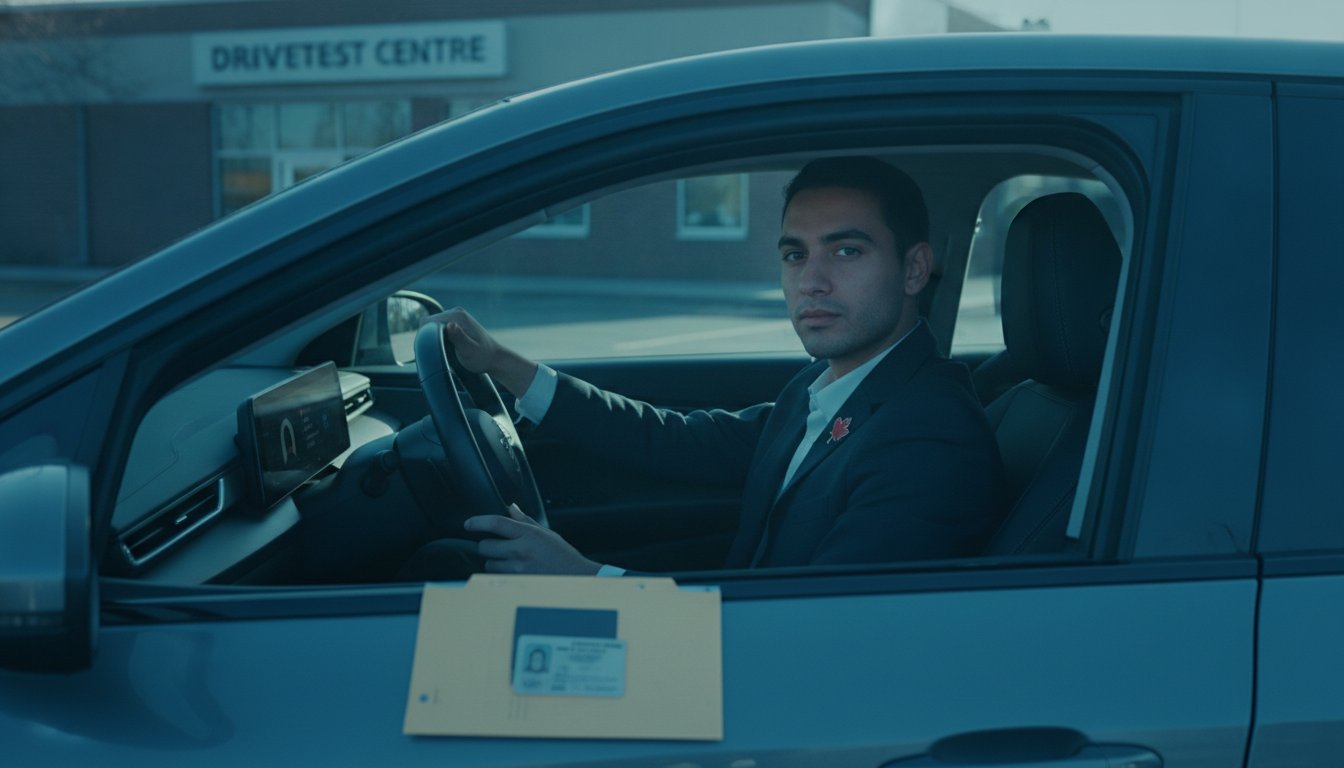
The most common reason for failing your G2 road test often has nothing to do with your driving skills. Many candidates are disqualified at the check-in desk before they even put the car in gear. It's a frustrating experience that leads to a lost fee and a long wait for a new slot. You've spent months practicing, so it's vital to know exactly what to bring to g2 road test ontario centres to avoid an early exit.
We know that navigating provincial requirements can feel like a bureaucratic maze. This 2026 checklist is here to simplify the process and ensure you arrive with total confidence. We'll walk you through the mandatory identification, the vehicle safety requirements your car must meet, and how to accurately complete your Highway Declaration. With these essentials ready, you can keep your focus where it belongs: on the road ahead.
Key Takeaways
- Carry your original, valid G1 licence or a temporary paper version to ensure you pass the initial administrative check.
- Verify that your vehicle is roadworthy by checking signal lights, brake lights, and wiper fluid levels before arriving at the centre.
- Prepare your Highway Declaration details, specifically your driving frequency on 400-series roads over the last three months.
- Confirm exactly what to bring to g2 road test ontario appointments to avoid a cancelled test and the loss of your booking fee.
- Arrive at least 30 minutes early and use designated road test parking spots to facilitate a smooth, professional check-in process.
Mandatory Identification and Documentation
Arriving at the DriveTest centre without the right paperwork is a guaranteed way to lose your appointment. The staff are strict about documentation because it's the foundation of the Graduated licensing system in Ontario. Knowing exactly what to bring to g2 road test ontario locations ensures your day starts with a "yes" at the counter rather than a cancellation. If you fail to present the correct items, you'll likely lose your booking fee and have to start the scheduling process all over again.
You must have your physical G1 licence in hand. Digital copies or photos of your licence on a smartphone aren't accepted for identity verification. Beyond your primary licence, consider these essentials for your folder:
- Your original G1 driver's licence: This must be valid and not expired. If it expires on the day of your test, you might face issues.
- A secondary piece of photo ID: While not always requested, having a passport or health card as a backup provides peace of mind if there's a question about your primary card.
- Booking confirmation: Keep a digital copy on your phone or a printed version. It helps the staff locate your file quickly if there's a system glitch.
What to do with a Temporary Licence
If you recently renewed your G1 or changed your address, you might only have a temporary paper licence. This is perfectly acceptable for your road test. You must ensure the paper document is legible and has not been altered in any way. Since the paper version lacks a photo, you'll need to bring an old photo ID, such as an expired plastic licence or a passport, to supplement it. Check the expiry date on the temporary document carefully. These often have shorter validity periods than standard cards, and an expired temporary licence is a common reason for test day disqualification.
Foreign Licences and Credits
If you're using out-of-province or out-of-country driving experience to skip waiting periods, your documentation needs to be perfect. You must provide original documents from your home jurisdiction. Photocopies or scanned emails won't work. If your licence isn't in English or French, you'll need a professional translation from a certified translator. The Ministry of Transportation requires these translations to be official to verify your experience level accurately. Don't wait until the morning of your test to check these requirements; a missing translation can result in an immediate cancellation of your slot.
Vehicle Requirements and Roadworthiness Checklist
The vehicle you drive is just as important as the documents you carry. If your car doesn't meet specific safety standards, the examiner will refuse to start the test. This results in a "vehicle out of order" status, meaning you lose your fee and must wait for a new appointment. When considering what to bring to g2 road test ontario, your vehicle's mechanical health should be at the top of your list.
The examiner performs a walk-around inspection before you leave the parking lot. You need to ensure every light is operational. This includes your front and rear signal lights, your hazards, and all three brake lights. Even a single burnt-out bulb will lead to an immediate disqualification. Your windshield must be clear of major cracks that obstruct your view, and your wipers must function perfectly with a full reservoir of washer fluid. These small details prove you've prepared for any driving condition.
Tires are another common point of failure. They must be properly inflated with visible tread across the entire surface. Most importantly, you cannot use a temporary "space-saver" or "donut" spare tire during the test. If you've had a flat recently, ensure a full-sized tire is installed before you arrive at the centre. Finally, keep your vehicle permit and a valid insurance slip in the glovebox. Reviewing G2 test insurance and vehicle requirements can help you confirm your coverage is up to date before the big day.
If your car fails inspection and you need to find a new slot quickly, you can find available road test dates to get back on track without a long wait.
The Pre-Test Inspection
Before the examiner gets into the passenger seat, they will stand outside and ask you to operate the controls. You'll need to demonstrate that your signals, brake lights, and horn are all working. They will also check that your parking brake is functional and can hold the car securely. A roadworthy vehicle is defined as one that meets all Highway Traffic Act safety standards.
Using a Rental or Borrowed Car
You don't need to own the vehicle you use for the test, but you must be prepared if it's borrowed or rented. If you're using a rental car, ensure the agreement explicitly allows for use during a road test. Some contracts have restrictions that could void your insurance coverage in this specific scenario. Take ten minutes before the test to locate the controls for the lights, wipers, and defroster. Different car models have varying layouts; fumbling for the wipers during a sudden downpour can lead to unnecessary stress. Always verify that the valid insurance slip for that specific vehicle is accessible in the glovebox.
The Declaration of Highway Driving Experience
The paperwork doesn't end with your licence and insurance. One of the most overlooked parts of the check-in process is the Highway Declaration. You must prove you have enough experience on high-speed roads to safely navigate the test route. Knowing what to bring to g2 road test ontario centres includes preparing for this specific verbal or written declaration of your driving history. If you can't provide these details, the examiner may cancel your test on the spot.
This requirement focuses on roads with speed limits of 80km/h or higher. You'll be asked how many times you've driven on these roads in the last three months. The Ministry of Transportation (MTO) needs to see a pattern of regular practice, not just a one-time trip. You also need to estimate the average length of these trips; specifically, whether they were under or over five kilometres. Reviewing the official G2 road test requirements will remind you that honesty is the only policy here. Providing false information on this declaration is a serious offence that can lead to an immediate fail or even a licence suspension.
Qualifying Highways for the G2 Test
Not every busy road counts toward your declaration. You must focus on major Ontario freeways and high-speed regional roads. This includes the 400-series highways like the 401, 403, 404, and 407, along with the Queen Elizabeth Way (QEW), the Gardiner Expressway, and the Don Valley Parkway. In some regions, high-speed regional roads with an 80km/h limit also qualify. Understanding the difference between a standard city street and a controlled-access highway is vital. This form is a critical stepping stone for the "G2 Exit" test as well, so building these habits now will save you stress during your full G appointment later.
How to Prepare Your Numbers
Don't guess your stats at the counter. Spend a few minutes the night before reviewing your driving logs or GPS history for the past 90 days. You need to state specific frequencies, such as "12 times in the last three months." If you're a G1 driver, remember that you should have gained this experience while accompanied by a licensed instructor or a driver with at least four years of experience. Ensure you are genuinely comfortable with merging and lane changes at high speeds. If the examiner feels your declared experience doesn't match your actual performance during the test, they have the authority to end the session early for safety reasons.

Arrival and Check-In Logistics
The final hurdle before you start your engine is the check-in process. Even if you have prepared every document, arriving late or parking in the wrong spot can derail your entire day. When you are double checking what to bring to g2 road test ontario lists, remember that your physical presence and your vehicle's location are just as important as your licence. Most Ontario DriveTest centres are busy hubs, so having a clear plan for your arrival will keep your stress levels low.
You must arrive at the centre at least 30 minutes before your scheduled appointment time. This window allows you to find parking, locate the check-in area, and handle any unexpected technical issues with the kiosks. Look for designated "Road Test" parking spots. These are usually numbered and located in a specific section of the lot. Do not park in the general service spots. If you park in the wrong area, your examiner might not be able to find you, which could lead to a cancelled test. Once you have parked, note your licence plate number. You will need it to complete your check-in at the desk or kiosk inside.
If you find that your current location is too busy or you want to try a centre with higher pass rates, you can book a road test at a different location to suit your schedule.
Navigating the DriveTest Centre
When you walk through the doors, you will likely see two different streams of people. One line is for general services, like licence renewals or photo updates. You should look for the "Road Test" check-in kiosks or a dedicated desk. These are usually separate to ensure applicants move through the system quickly. Enter your licence number and your vehicle's plate number into the system. After you finish, the kiosk will provide instructions on where to wait. Keep an eye on the overhead monitors. They will display your name or plate number when an examiner is ready to meet you at your vehicle. Stay with your car once the check-in is complete; if you are not there when the examiner arrives, they will move on to the next person.
What Happens if You Are Late?
Ontario DriveTest centres operate on a very tight schedule. Most locations have a strict 15-minute cut-off policy. If you arrive more than 15 minutes past your appointment time, the system will automatically cancel your slot. This results in the forfeiture of your booking fee. You will have to pay again to schedule a new attempt. Lateness is often treated the same as a "no-show," so it is better to be significantly early than a few minutes late. For a deeper dive into the rules, read our guide on Everything You Need to Know About the Ontario G2 Road Test in 2026. Being prepared for these logistics ensures you don't lose your chance to drive before the test even begins.
Managing Your Appointment and Booking Support
Your preparation involves more than just a physical folder of papers. It includes having a clear grasp of your appointment logistics. Double check your confirmation email to verify the exact time, date, and location. If you used a specialized booking service, you can often access streamlined support to clarify these details. Knowing exactly what to bring to g2 road test ontario centres is the first step, but being ready to handle a last-minute change is the second. A service-oriented approach helps you stay organized so you can focus on your driving skills rather than administrative hurdles.
Life happens. You might face a sudden mechanical issue or a personal emergency. If you need to reschedule, doing so early is essential to avoid losing your prepaid fee. Using an independent booking facilitator simplifies this process. They act as a helpful intermediary, helping you find a new slot when the official portals show zero availability for months. This transparent and honest support fosters trust, especially when you are trying to resolve a complex scheduling conflict. It turns a time-consuming task into a manageable one, providing peace of mind through constant availability.
Securing a New Slot if Things Go Wrong
If your vehicle fails the pre-test inspection, don't panic. It's a common setback, but it doesn't mean you're grounded for the season. You can often find a new appointment much faster than you think by looking for cancellations at nearby centres. For more tips on finding these hidden gems, check out our guide on Road Test Booking Hacks Ontario: The Ultimate 2026 Checklist. Being a problem-solver in this situation means staying calm and using the right tools to get back into the driver's seat quickly.
The Peace of Mind Factor
Organization is the best cure for test day jitters. When you know your paperwork is flawless and your car is ready, your mind is free to focus on the examiner's instructions. Trust the process. The examiner isn't there to trick you; they are there to ensure you can safely share the road with others. Before you leave your driveway, do one final sweep of your what to bring to g2 road test ontario essentials:
- Valid G1 licence (plastic or temporary paper version).
- Proof of vehicle insurance and ownership documents.
- Fully functional lights, signals, and horn.
- A clear, honest summary of your highway driving history.
With these items secured, you've removed the administrative barriers to your success. You can walk into the DriveTest centre with confidence, knowing you've done everything possible to prepare for a successful result.
Ready for Test Day Success
Success on test day starts long before you pull out of your driveway. By organizing your original G1 licence, verifying your vehicle's safety features, and preparing your highway driving stats, you've removed the most common barriers to passing. Knowing exactly what to bring to g2 road test ontario appointments ensures you won't face a frustrating cancellation at the check-in desk.
Beyond mechanical checks, clear vision is a cornerstone of driving safety. To ensure your eyes are ready for the road, read more about the comprehensive optometric services available.
If you are still looking for the perfect time or location to take your test, we can help. As an independent service for busy Ontario drivers, we specialize in stress-free booking management to help you find road test slots faster than the standard wait times. Our goal is to simplify the logistics so you can focus on your driving skills.
Secure your next road test appointment with ease today! You've put in the practice hours and studied the rules. Now, with your documents in order and your vehicle ready, you can focus on the road with total confidence. You've got this.
Frequently Asked Questions
Can I take my G2 road test with an expired G1 licence?
No, you cannot take the test if your G1 licence is expired. You must present a valid, unexpired licence at the check-in desk. If your licence has reached its five-year limit, you must visit a ServiceOntario or DriveTest centre to renew it before you can attempt any road test.
What happens if my car's brake light is out during the inspection?
Your test will be cancelled immediately if any brake light is non-functional. The examiner will mark your vehicle as "out of order," and you will lose your booking fee. It's essential to check all your lights, including the high-mount centre brake light, before you leave home.
Do I need to bring my own car for the G2 test in Ontario?
No, you don't need to own the vehicle you use for the test. You can use a car from a driving school, a friend, or a family member. The most important part of what to bring to g2 road test ontario is ensuring the vehicle you choose is fully insured and meets all provincial safety standards.
How much highway driving experience do I need for the G2 test?
You must have driven on highways with a speed limit of at least 80km/h at least five times within the three months before your test. You will be asked to declare this frequency at the centre. If you haven't met this minimum, your test can be cancelled for safety reasons.
Can I bring a friend or parent with me in the car during the test?
No, only you and the examiner are allowed in the vehicle during the road test. Pets and other passengers are strictly prohibited. This rule ensures the examiner can evaluate your skills without outside distractions or interference.
What documents do I need if I am using a rental car?
You must bring the official rental agreement and the specific insurance slip for that vehicle. Ensure the rental contract does not explicitly forbid using the car for a government road test. You'll also need to know the licence plate number for the check-in kiosk.
Is there a fee to reschedule my road test if I forget my ID?
Yes, forgetting your ID usually results in a cancelled test and the loss of your prepaid fee. If you realize you've forgotten your licence, try to reschedule at least 48 hours in advance to avoid penalties. Last-minute cancellations due to missing documents are treated as "no-shows."
How early should I arrive at the DriveTest centre for my G2 test?
You should arrive at least 30 minutes before your scheduled appointment. This gives you enough time to find a "Road Test" parking spot and complete the check-in process at the kiosk. Arriving late can lead to an automatic cancellation of your slot.


